
Community Wildfire Protection Plans
Get involved!
- Washoe county residents, take the CWPP survey by the end of November! Survey in English. Encuesta en Español.
What is a Community Wildfire Protection Plan?
A Community Wildfire Protection Plan (CWPP) is a locally developed, collaborative strategy designed to reduce wildfire risk and protect communities, resources, and infrastructure. It identifies high-risk areas, sets priorities for fuel reduction projects, and outlines emergency response plans tailored to the specific needs of the community. By bringing together residents, government agencies, fire authorities, and tribal representatives, a CWPP helps ensure coordinated action and enhances overall wildfire resilience.
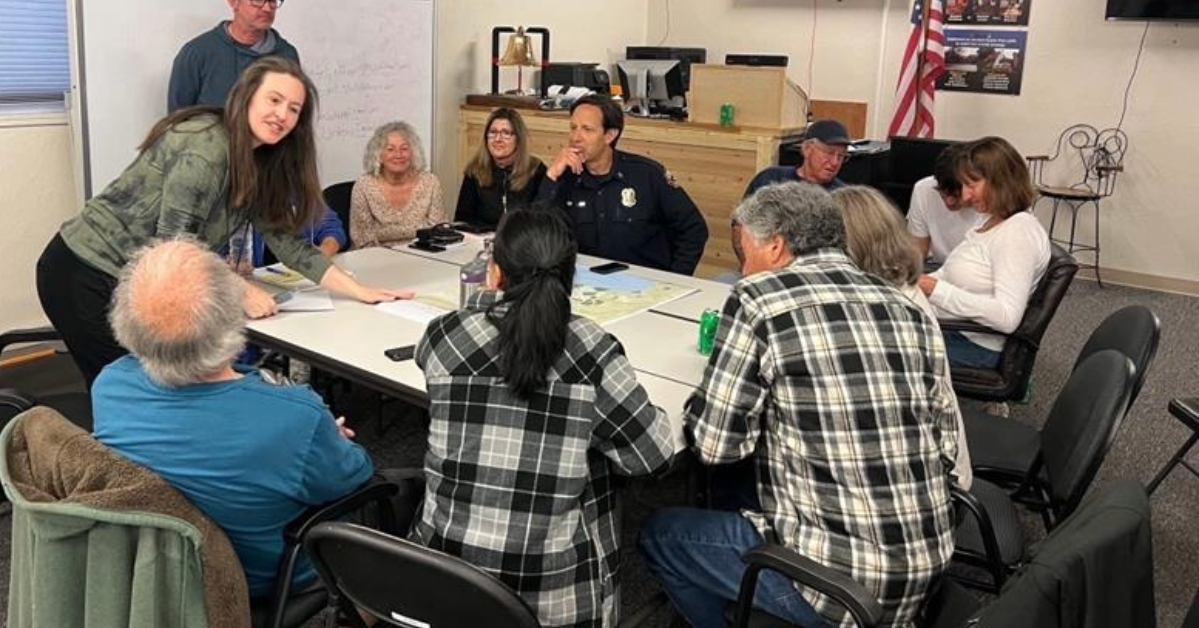
The CWPP process is just as important as the plan itself — it lays the groundwork for future collaboration to carry out its goals. This process is meant to be open and inclusive, engaging local and state officials, federal land managers, community members, and other partners.
Links to county CWPP Pages
Find CWPP resources here.

Frequently Asked Questions
How do CWPPs help communities?
Communities are able to put their knowledge and values into a CWPP. This means having self-defined boundaries and working collaboratively to identify projects that are prioritized based on what’s important to each community. These plans open doors to funding sources or partners to then implement the projects.
What are different pathways for creating more wildfire resilient communities?
Because of the nature of wildfire, actions taken as a group or community are more effective than actions taken by just one person or household. There are many ways that an individual or family can prepare for a wildfire and even more ways to take action as a community. One way to think about this is three main project types: 1) Fuel modifications or vegetation management that can include grazing, brush removal, protecting critical places like water sources, or restoration of a more fire-adapted ecosystem 2) people-based solutions that can include outreach, localized planning or events that promote fire resilience or methods on how to share resources 3) Emergency response that can help prepare for the event of a wildfire like evacuation planning, increasing resources to firefighters, or creating locations where firefighters can stage defensive actions.
How long does it take to create a CWPP?
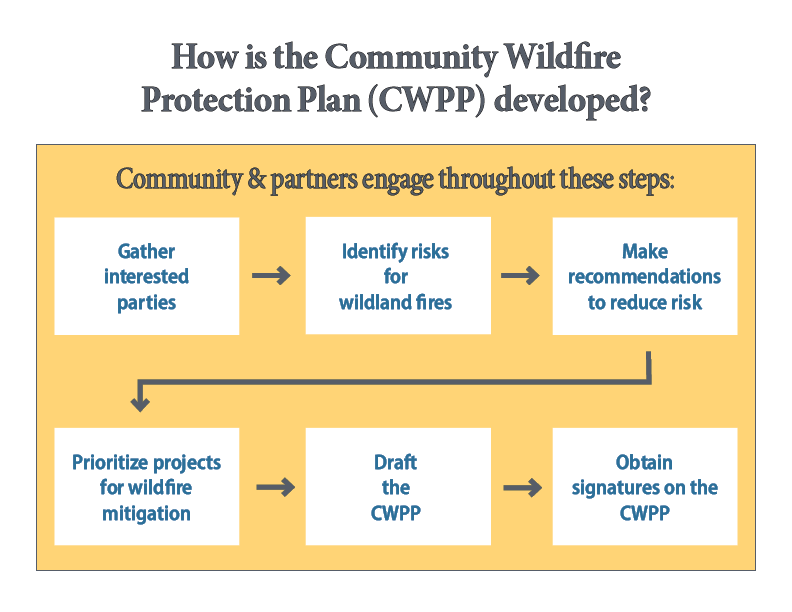
CWPP’s can take a few months to over a year from start to finish. This is because having advanced notice and allowing time for different voices to be heard can take time, especially with our busy lives. Larger geographic areas and finding common goals when people have different priorities can also add time to the process.
How does a CWPP interact with other plans, rules and/or regulations?
Part of the CWPP process is looking through existing plans and regulations and seeing where there are opportunities and overlap between projects and priorities. By identifying the crossover of your CWPP with other plans and regulations, you can find overlap that can help leverage actions and priorities. One common example is a Hazard Mitigation Plan where recommended actions related to fire mitigation will be referenced in a CWPP or vice versa. For example, a Hazard Mitigation Plan might identify an important evacuation route for all types of disaster. This route can be included in the both plans but with different actions that compliment creating a safer roadway in both plans.
What is a Firewise Community and how are they different than a CWPP?
NFPA Firewise Recognition is a separate program from the CWPP. Where NFPA Firewise really focuses on structures (home hardening) and defensible space at a neighborhood level, a CWPP zooms out to look at larger scale projects and often include projects from land management agencies or fire departments. The good news is that these two efforts can work really well together and can be pursued at the same time. Becoming Firewise recognized can even be a project listed in CWPP’s and parts of a CWPP can be part of the 3-year action plan for a Firewise community.
How does the CWPP align with other ongoing efforts?
In developing a CWPP, we will work closely with agencies, non-profits, and local organizations to make sure we are coordinating efforts and being as effective as possible without duplicating efforts. Examples include: working with neighborhood groups including HOA’s and NFPA Firewise communities, having regular meetings with county leadership on the CWPP progress, and integrating ongoing work as projects into our CWPP.
How will the CWPP help me on my property?
The CWPP will focus on projects that are collaborative and make a larger-scale impact than just one property. In many cases, projects will need property owners to do their part and advocate for work that will increase fire safety at a neighborhood scale. For actions that you can do on your own property, especially around your own home, explore resources from NFPA Firewise or Nevada Division of Forestry’s Wildfire Preparedness web site.
What is a Community Wildfire Defense Grant (CWDG) and why is it important to CWPPs?
Community Wildfire Defense Grants (CWDG) help communities and Tribes plan for and reduce wildfire risk and implement the National Cohesive Wildland Fire Management Strategy. This is the funding source most often used to create, update, and implement CWPP’s.